
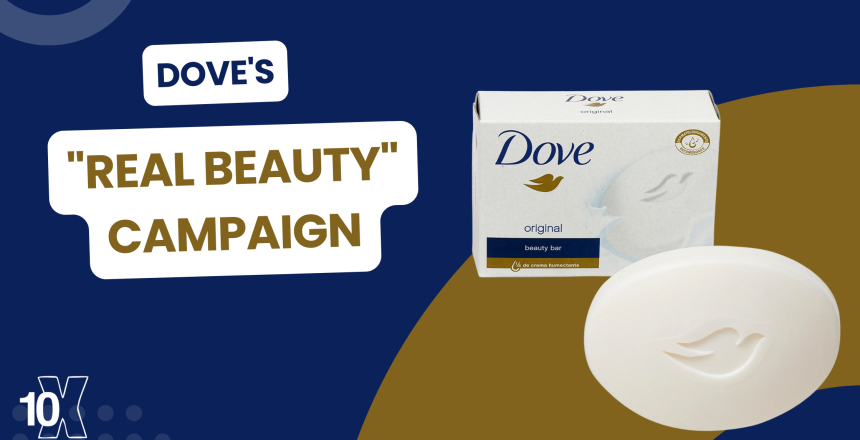
Dove’s “Real Beauty” campaign was a highly successful marketing campaign launched in 2004. The campaign sought to challenge traditional beauty standards and promote a more diverse and realistic representation of beauty.
One of the key strengths of the campaign was its use of real women in its advertising. Rather than using professional models with unrealistic body types, the campaign featured women of different ages, sizes, and races, who were shown in natural, unretouched photographs. This approach challenged traditional beauty standards and helped to make the campaign relatable and authentic.
In addition to using real women, the campaign also featured a powerful message. Rather than promoting a specific product, the campaign focused on promoting self-esteem and body positivity. This message resonated with many women and helped establish Dove as a brand that cares about its customers and their well-being.
The success of the campaign was reflected in its impressive results. The campaign generated significant media coverage and public engagement and helped increase sales of Dove products. Additionally, the campaign won numerous awards and was widely praised by both customers and the media.
Overall, Dove’s “Real Beauty” campaign was a highly successful marketing campaign that effectively used real women and a powerful message to challenge traditional beauty standards and promote body positivity.
Reasons for the success of Dove’s Real Beauty campaign
Dove’s Real Beauty campaign was successful for a number of reasons:
- Strong message: The campaign’s message of promoting positive body image and self-esteem was powerful and resonated with many people, particularly women.
- Emotional appeal: The campaign tapped into people’s emotions by highlighting the importance of self-acceptance and celebrating diversity. This helped to create a strong emotional connection with consumers.
- Use of social media: The campaign was heavily promoted on social media, where people could share their own stories and experiences using the hashtag #RealBeauty. This helped to generate buzz and drive word-of-mouth marketing.
- Celebrity endorsements: The campaign featured celebrities’ endorsements, which helped increase its visibility and credibility.
- Positive media coverage: The campaign received widespread media coverage, which helped to amplify its message and reach a larger audience.
- Impact on sales: The campaign significantly impacted Dove’s sales, with a sales increase of 22% in the first year after the launch. This demonstrates the campaign’s effectiveness in driving consumer behavior and purchasing decisions.
Limitations to Dove’s Real Beauty campaign
There were a few limitations to Dove’s Real Beauty campaign:
- Limited geographical availability: The campaign was only available in certain countries, so it was not accessible to all consumers worldwide.
- Limited time frame: The campaign had a fixed end date, which may have limited its overall impact and reach.
- Limited budget: Like any marketing campaign, Dove’s Real Beauty campaign had a limited budget, which may have limited the scope and reach of the campaign.
- Competition: The campaign faced competition from other brands and products, which may have limited its impact on consumer behavior and purchasing decisions.
- Limited control over the message: As with any campaign that relies on user-generated content, Dove had limited control over the messages and images that were shared using the #RealBeauty hashtag. This could have potentially led to negative or inappropriate content associated with the campaign.
- Potential backlash: The campaign’s focus on promoting positive body image and self-esteem may have been perceived as preachy or preachy by some people, which could have resulted in backlash.
Marketing lessons from Dove’s Real Beauty campaign
There are several marketing lessons that can be learned from Dove’s Real Beauty campaign:
- Strong messages are important: The campaign’s message of promoting positive body image and self-esteem was powerful and resonated with many people, particularly women. This demonstrates the importance of having a clear and compelling message in marketing campaigns.
- Emotional appeal can be effective: The campaign tapped into people’s emotions by highlighting the importance of self-acceptance and celebrating diversity. This demonstrates the importance of using emotional appeal in marketing to connect with consumers on a deeper level.
- Social media can be a powerful tool: The campaign was heavily promoted on social media, where people could share their own stories and experiences using the hashtag #RealBeauty. This helped to generate buzz and drive word-of-mouth marketing. This shows the importance of having a solid social media presence and leveraging social media platforms to reach and engage consumers.
- Celebrity endorsements can increase visibility and credibility: The campaign featured endorsements from celebrities, which helped to increase its visibility and credibility. This shows the potential value of celebrity endorsements in marketing campaigns.
- Positive media coverage can amplify a campaign’s message: The campaign received widespread media coverage, which helped to amplify its message and reach a larger audience. This demonstrates the importance of seeking positive media coverage for marketing campaigns.
- Impact on sales: The campaign significantly impacted Dove’s sales, with a sales increase of 22% in the first year after the launch. This demonstrates the campaign’s effectiveness in driving consumer behavior and purchasing decisions.