
Introduction: Who is Vladimir Putin?
Vladimir Putin is the current President of the Russian Federation, a position he has held since 2012. He is a former KGB officer and has been involved in Russian politics since the 1990s.
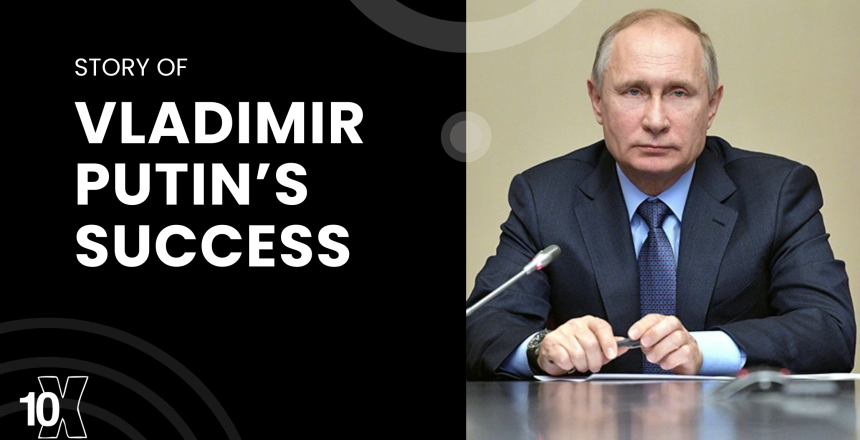
Story of Vladimir Putin’s Success
Putin was born in 1952 and grew up in Leningrad (now St. Petersburg). He studied law at Leningrad State University and then joined the KGB, the Soviet Union’s security and intelligence agency. He served as a KGB officer until the Soviet Union’s collapse in 1991.
After the collapse of the Soviet Union, Putin entered politics, serving as an advisor to the Mayor of St. Petersburg and then as the head of the Federal Security Service, the KGB’s successor agency. In 1999, he was appointed Prime Minister of Russia, and in 2000, he was elected President.
As President, Putin has pursued a number of controversial policies, including the annexation of Crimea, the intervention in the Syrian civil war, and the suppression of political opposition. He has also worked to strengthen the Russian state and improve the country’s economy.
Putin has been a dominant figure in Russian politics for over two decades and is considered one of the most powerful leaders in the world. He has been criticized for his authoritarian governance style and human rights record.
Overall, Vladimir Putin is a powerful and influential political figure who has played a key role in shaping the direction of Russia in the 21st century. His strong leadership and controversial policies have earned him both praise and criticism.
Analysis of Vladimir Putin’s Success
Vladimir Putin has had a long and successful career in politics and is currently serving as the President of Russia. He first came to power in 2000, succeeding Boris Yeltsin as President, and was re-elected in 2004. In 2008, he was required to step down due to term limits, but he returned to the presidency in 2012 and has been in power since then.
Putin has focused on strengthening Russia’s domestic and international influence throughout his political career. He has worked to rebuild the country’s military and has taken a more assertive stance on the world stage, particularly in the Middle East and Eastern Europe. He has also worked to centralize power and control within the government, leading to criticism from some quarters that he is an autocrat.
Despite these criticisms, Putin remains popular among many Russians, who see him as a strong leader who has brought stability and prosperity to the country after the tumultuous years following the collapse of the Soviet Union. However, his government has also been accused of suppressing dissent and cracking down on opposition groups.
In conclusion, Putin’s success can be attributed to his focus on consolidating power and rebuilding Russia’s domestic and international influence. However, his methods have also been a source of criticism and controversy.
Impact of Vladimir Putin’s Life and Career
Vladimir Putin has had a significant impact on the political landscape of Russia and the world as a whole. He has served as the President of Russia for three terms, from 2000 to 2008 and from 2012 to the present, making him one of the longest-serving leaders in the country’s history.
During his time in office, Putin has overseen significant economic and political changes in Russia, including expanding the country’s energy sector and strengthening its military. He has also faced criticism for his handling of issues such as human rights and corruption and his involvement in conflicts such as the ongoing conflict in Syria.
Despite these challenges, Putin has maintained a high level of popularity among the Russian people, partly thanks to his strong image and ability to project a sense of stability and strength for the country on the international stage.
In conclusion, Putin’s success can be attributed to his strategic leadership and ability to navigate complex political and economic issues, as well as his strong public image and support from the Russian people. However, his leadership has also faced significant criticism and controversy, and it remains to be seen how his legacy will be viewed in the future.
Conclusion: Lessons Learned from Vladimir Putin’s Personal Life
Vladimir Putin has been the President of Russia since 2000, making him the country’s longest-serving leader since Joseph Stalin. His rise to power has been marked by controversy and allegations of corruption and human rights abuses.
Despite these criticisms, Putin has managed to maintain a high level of popularity among the Russian people, largely due to his strongman image and efforts to restore Russian influence on the global stage.
One of the key factors in Putin’s success has been his ability to manipulate the media and control the narrative in his favor. He has used state-controlled media outlets to promote his policies and discredit his opponents and has been accused of using propaganda to sway public opinion.
In terms of his personal life, Putin has been married twice and has two daughters. He is known for his love of sports and outdoor activities and has been photographed participating in various activities, such as horseback riding and martial arts.
As a leader, Putin’s rule has been marked by authoritarianism and a lack of transparency. However, his strongman image and ability to maintain power have made him a formidable figure on the world stage. The lessons that can be learned from his success include maintaining control over the narrative and projecting an image of strength and authority.