
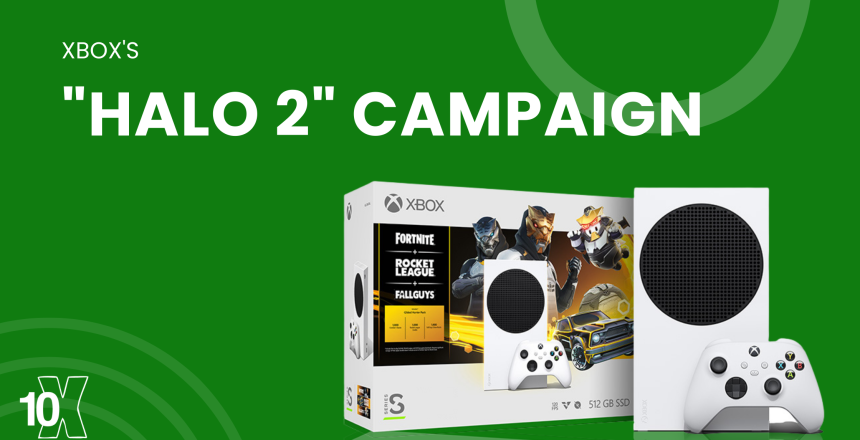
Microsoft’s Xbox “Halo 2” campaign was a marketing campaign launched in 2004 to promote the release of the popular video game Halo 2. The campaign included a series of television commercials, print ads, and online videos to build excitement and anticipation for the game’s release.
The campaign’s centerpiece was a television commercial titled “The Making of Halo 2,” which featured behind-the-scenes footage of the game’s development and interviews with the game’s creators. The commercial was narrated by actor Keith David, who provided the voice for one of the game’s main characters, the Arbiter. The commercial ended with the tagline “Halo 2” and the Xbox logo.
In addition to the television commercials, the Halo 2 campaign included a series of print ads and online videos highlighting different aspects of the game, such as its immersive storyline, intense action, and stunning graphics. The campaign also included a series of special events, such as a “Halo 2” launch party at the Hollywood Palladium in Los Angeles, where fans could play the game for the first time and meet the game’s creators.
Overall, the Halo 2 campaign was a huge success, helping to build excitement and anticipation for the game’s release and establish it as one of the most popular and successful video games. It also helped to enhance the reputation of the Xbox as a leading gaming platform and contributed to its ongoing success.
Reasons for the success of Xbox’s Halo 2 campaign
Xbox’s Halo 2 campaign was a marketing campaign that was designed to promote the video game and was successful for a number of reasons:
- Strong product: The game was highly anticipated and had a strong reputation, which helped drive interest and sales.
- Wide appeal: The game had a wide appeal to both casual and hardcore gamers, which helped to increase its reach and impact.
- Strong marketing: The campaign featured a range of marketing activities, including television commercials, online advertising, and product placements, which helped to increase its visibility and reach.
- Use of influencers: The campaign featured partnerships with influencers and celebrities, which helped to increase its credibility and reach.
- Social media marketing: The campaign featured a strong presence on social media platforms, including Twitter, Facebook, and Instagram, which helped to increase its reach and engagement.
- Strong visual appeal: The campaign featured visually appealing advertisements and graphics showcasing the game’s exciting and immersive nature. This helped to make the campaign more appealing and engaging to consumers.
- Impact on brand perception: The campaign positively impacted the Xbox brand perception, with many people viewing the brand as being associated with high-quality and innovative video games. This demonstrates the campaign’s effectiveness in shaping consumer perceptions of the brand.
- Wide media coverage: The campaign received widespread media coverage, which helped to amplify its message and reach a larger audience. This demonstrates the importance of seeking media coverage for marketing campaigns.
Limitations to Xbox’s Halo 2 campaign
There were a few limitations to Xbox’s Halo 2 campaign:
- Limited budget: Like any marketing campaign, Xbox’s Halo 2 campaign had a limited budget, which may have limited the scope and reach of the campaign.
- Competition: The campaign faced competition from other video game products and platforms, which may have limited its impact on consumer behavior and purchasing decisions.
- Limited control over the message: As with any campaign that relies on user-generated content, Xbox had limited control over the messages and images shared about the campaign. This could have led to harmful or inappropriate content associated with the campaign.
- Limited relevance to some consumers: The campaign may not have been relevant to all consumers, particularly those not interested in video games.
- Limited geographical availability: The campaign was only available in certain countries, so it was not accessible to all consumers worldwide.
- Limited time frame: The campaign had a fixed end date, which may have limited its overall impact and reach.
- Potential backlash: The campaign may have faced backlash from some people who felt it was oversimplified or unhealthy.
- Limited transparency: Some people felt that the campaign was not transparent enough about Xbox’s business practices and the potential negative impacts of its products on society and the environment.
Criticism against Xbox’s Halo 2 campaign
Xbox’s Halo 2 campaign faced some criticism, including:
- Health concerns: Some people felt the campaign promoted unhealthy habits and contributed to the global obesity epidemic.
- Insincerity: Some people felt that the campaign was insincere and that Xbox only used the message “I’m Lovin’ It” as a marketing tactic.
- Misrepresentation: Some people felt that the campaign misrepresented the quality and value of the game and that Xbox was not genuinely committed to promoting healthy video gaming habits.
- Inauthenticity: Some people felt that the campaign was inauthentic and that Xbox was not genuinely committed to encouraging people to enjoy the game.
- Backlash: The campaign faced backlash from some people who felt it was oversimplified or unhealthy.
Marketing lessons from Xbox’s Halo 2 campaign
There are several marketing lessons that can be learned from Xbox’s Halo 2 campaign:
- Strong products are essential: The game was highly anticipated and had a strong reputation, which helped drive interest and sales. This demonstrates the importance of having a strong product as the foundation of a marketing campaign.
- Wide appeal can be valuable: The game had a wide appeal to both casual and hardcore gamers, which helped to increase its reach and impact. This demonstrates the potential value of targeting a wide audience in marketing campaigns.
- Strong marketing is essential: The campaign featured a range of marketing activities, including television commercials, online advertising, and product placements, which helped to increase its visibility and reach. This demonstrates the importance of using a range of marketing tactics to increase the reach and impact of a campaign.
- Influencer partnerships can be effective: The campaign featured partnerships with influencers and celebrities, which helped to increase its credibility and reach. This demonstrates the potential value of partnering with influencers in marketing campaigns.
- Social media marketing can be powerful: The campaign featured a strong presence on social media platforms, including Twitter, Facebook, and Instagram, which helped to increase its reach and engagement. This demonstrates the potential value of using social media in marketing campaigns.
- Strong visual appeal is essential: The campaign featured visually appealing advertisements and graphics showcasing the game’s exciting and immersive nature. This helped to make the campaign more appealing and engaging to consumers.
- Impact on brand perception: The campaign positively impacted the Xbox brand perception, with many people viewing the brand as being associated with high-quality and innovative video games. This demonstrates the campaign’s effectiveness in shaping consumer perceptions of the brand.
- Wide media coverage can amplify a campaign’s message: The campaign received widespread media coverage, which helped to amplify its message and reach a larger audience. This demonstrates the importance of seeking media coverage for marketing campaigns.