
Introduction: Who is Xi Jinping?
Xi Jinping is the current President of the People’s Republic of China and the General Secretary of the Communist Party of China. He has been in power since 2012 and is known for his strong leadership and ambitious reform agenda.
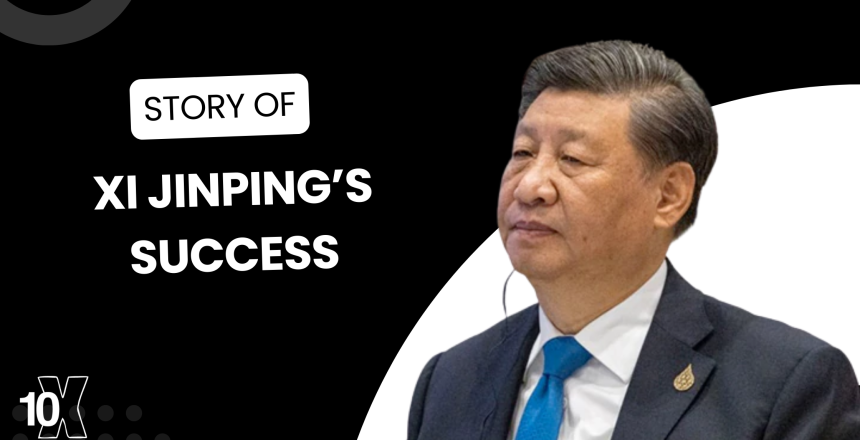
Story of Xi Jinping’s Success
Xi was born in 1953 and grew up in Beijing. He studied chemical engineering at Tsinghua University and joined the Communist Party of China. He rose through the ranks of the party and held a number of positions, including Governor of Fujian Province and Party Secretary of Shanghai.
In 2012, Xi was elected President of the People’s Republic of China and became the General Secretary of the Communist Party of China. Since taking office, he has pursued a number of ambitious reform initiatives, including measures to combat corruption and promote economic development.
Xi is known for his strong leadership style and commitment to the principles of socialism with Chinese characteristics. He has been involved in a number of high-profile initiatives, including the Belt and Road Initiative and the Made in China 2025 plan, which aims to enhance China’s global economic influence.
Xi has also been active on the international stage, playing a key role in climate change and trade negotiations. He has sought to strengthen China’s relationships with other countries and has worked to promote the country’s interests abroad.
Overall, Xi Jinping is a powerful and influential political leader who has played a key role in shaping the direction of China in the 21st century. His strong leadership and reform agenda have helped to solidify his position as one of the most important figures in global politics.
Analysis of Xi Jinping’s Success
Xi Jinping is the current President of the People’s Republic of China and General Secretary of the Communist Party of China. He has played a significant role in China’s modern history, leading the country through rapid economic growth and modernization.
Xi Jinping’s success can be attributed to a number of factors. One of these is his political skill and savvy, which has allowed him to rise through the ranks of the Communist Party and eventually assume the top leadership role. He has also been effective at building a strong power base within the party, allowing him to pursue his policy goals with relatively little opposition.
Xi Jinping has also successfully implemented economic reforms that have helped drive China’s rapid economic growth. He has focused on increasing foreign investment, modernizing infrastructure, and encouraging the development of new technologies. These efforts have helped to transform China into one of the world’s leading economic powers.
Despite his successes, Xi Jinping has faced several challenges and criticisms. Some have criticized his authoritarian leadership style and China’s crackdown on civil liberties. Others have expressed concern about China’s economic policies and potential economic instability.
Xi Jinping’s success can be attributed to his political skill, effective economic policies, and strong leadership. However, it remains to be seen how he will navigate the challenges and criticisms he has faced in the future.
Impact of Xi Jinping’s Life and Career
Xi Jinping is the current President of the People’s Republic of China and the General Secretary of the Communist Party of China. He is considered one of the most powerful leaders in the world and has played a significant role in shaping the direction of China’s domestic and foreign policies.
Milestones and accomplishments have marked Xi Jinping’s life and career. He was born into a family of revolutionary leaders, and his father, Xi Zhongxun, was a prominent figure in the early days of the People’s Republic of China. Xi Jinping began his political career at a young age, serving in various positions within the Communist Party before eventually rising to the top leadership role.
Under Xi Jinping’s leadership, China has experienced significant economic growth and development, becoming the world’s second-largest economy. Xi has also implemented several domestic policies to strengthen the country’s social and economic systems, including initiatives to reduce poverty and improve the lives of ordinary citizens.
However, Xi Jinping’s leadership has also been marked by a number of controversies and criticisms. His administration has been accused of human rights abuses, particularly in treating ethnic minorities and restricting freedom of expression and political dissent. Xi has also been criticized for handling foreign relations, with some accusing him of pursuing an aggressive and expansionist foreign policy.
Despite these criticisms, Xi Jinping has remained a powerful and influential leader, and his impact on China and the world will likely be felt for years to come.
Conclusion: Lessons Learned from Xi Jinping’s Personal Life
Xi Jinping is the current President of the People’s Republic of China and General Secretary of the Communist Party of China. He has held these positions since 2012, and his influence on China’s political landscape and international relations cannot be overstated.
Xi Jinping’s rise to power was not without controversy. He is the son of Xi Zhongxun, a former revolutionary and high-ranking party leader, and his family has been the subject of corruption allegations. However, Xi Jinping has portrayed himself as a strong leader committed to fighting corruption and improving the lives of ordinary Chinese citizens.
One of Xi Jinping’s most significant achievements has been his efforts to modernize and reform China’s economy. Under his leadership, China has become the world’s second-largest economy and has made significant progress in technology, infrastructure, and healthcare.
Xi Jinping has also taken a more assertive stance on foreign policy issues, particularly in the South China Sea, where China has been accused of territorial expansion and aggressive behavior. This has led to tensions with other countries, including the United States, and has raised concerns about China’s intentions and role in the international community.
In conclusion, Xi Jinping has significantly impacted China’s domestic and international affairs. While his leadership has brought about significant economic and social improvements, it has also been marred by controversy and criticism. The lessons to be learned from his success and challenges will likely continue to shape China’s future for years to come.