
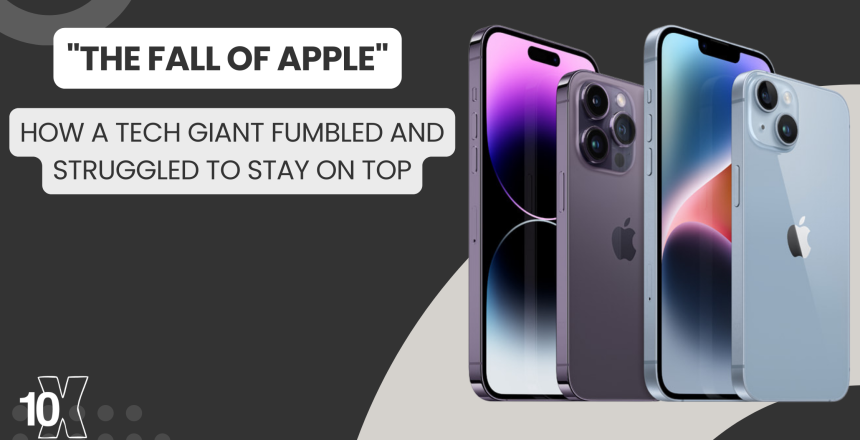
Introduction to Apple and its early success
Apple is an American multinational technology company headquartered in Cupertino, California, that designs, develops, and sells consumer electronics, computer software, and online services. The company’s hardware products include the iPhone smartphone, the iPad tablet computer, the Mac personal computer, the iPod portable media player, the Apple Watch smartwatch, and the Apple HomePod smart speaker. Apple’s software includes the macOS and iOS operating systems, the iTunes media player, the Safari web browser, and the iLife and iWork creativity and productivity suites. Its online services include the iTunes Store, the iOS App Store, Mac App Store, and iCloud.
Apple was founded by Steve Jobs, Steve Wozniak, and Ronald Wayne on April 1, 1976, to develop and sell personal computers. It was incorporated as Apple Computer, Inc., on January 3, 1977, and was renamed Apple Inc. on January 9, 2007, to reflect its shifted focus toward consumer electronics. Apple (NASDAQ: AAPL) is the world’s largest information technology company by revenue and one of the world’s most valuable companies. As of September 2021, it was the 11th-largest company in the world by market capitalization. Apple is the world’s third-largest mobile phone manufacturer after Samsung and Huawei. In August 2021, Apple became the first publicly traded U.S. company valued at over $2 trillion.
The rise of competitors and challenges to Apple’s dominance
Apple’s early success can be attributed to the unique and user-friendly design of its products, as well as its strong focus on marketing and branding. However, in recent years, Apple has faced increasing competition from other established and up-and-coming technology companies. Companies such as Samsung, Google, and Microsoft have all released products similar to or directly competing with Apple’s offerings, which has led to a more crowded and competitive market. Companies such as Huawei and Xiaomi have also emerged as strong players in the global smartphone market, further challenging Apple’s dominance.
To continue to thrive in this competitive landscape, Apple has had to constantly innovate and evolve its products and services to stay ahead of the competition. This has included the introduction of new features and technologies, as well as the expansion of its product line to include new categories such as home automation and wearables. Despite these challenges, Apple has remained a leader in technology, thanks to its strong brand and loyal customer base.
Apple’s response to the changing market
Apple has always been known for its innovative approach to technology and ability to adapt to the changing market. When competitors started to rise and challenge Apple’s dominance in the industry, the company responded by releasing new and improved products. One example is the introduction of the iPhone X, which featured a new design and advanced technology such as facial recognition and an edge-to-edge display. Apple also expanded its product line to include the Apple Watch and the HomePod smart speaker, further cementing its position as a leader in the tech industry.
In addition to releasing new products, Apple has also focused on improving the user experience for its customers. This includes updates to its operating system, such as the introduction of iOS 12, which included new features such as screen time limits and improved notifications. Apple has also made an effort to improve its customer service, including adding live chat support and expanding its repair service network.
Overall, Apple’s response to the changing market has been to continue innovating and improving its products and services, solidifying its position as a leader in the tech industry.
The decline of Apple’s market share
Apple has been a dominant player in the tech industry for decades, with a wide range of products that have consistently set the standard for innovation and design. However, in recent years, the company has faced increasing competition from other tech giants and up-and-coming companies, leading to a decline in its market share.
One major factor contributing to this decline is the rise of smartphone competitors. In the early days of the smartphone market, Apple’s iPhone was the undisputed leader, with a sleek design and intuitive user interface that set it apart from the competition. However, as the market has become more crowded, other companies have introduced their high-quality smartphone options, such as Samsung’s Galaxy line and Google’s Pixel phones. These competitors have taken a significant chunk of the market share away from Apple, and it has struggled to keep up.
Another challenge for Apple has been the increasing popularity of alternative operating systems, such as Android. While Apple’s iOS has long been considered the most user-friendly and intuitive mobile operating system, Android has gained a strong following thanks to its customizable interface and the ability to access a wider range of apps. This has led to many consumers choosing Android-powered devices over iPhones, further eroding Apple’s market share.
The future of Apple in a highly competitive market
In an effort to combat the challenges, Apple has focused on expanding its product line and introducing new technologies. For example, the company has introduced the Apple Watch and HomePod, as well as expanding its services offerings with the launch of Apple Music and Apple TV+. While these efforts have helped boost sales and diversify the company’s revenue streams, they have not fully reversed the decline in Apple’s market share.
It is not accurate to say that Apple has fallen as a company. In fact, Apple remains one of the world’s most successful and influential technology companies. The company has consistently released innovative and popular products and is a leader in the technology industry.
One potential area where Apple has faced challenges is in the smartphone market. The company has recently faced increased competition from other smartphone manufacturers, such as Samsung and Huawei. This has led to a decline in the market share of Apple’s iPhone and has contributed to a slowdown in the company’s overall growth.
However, Apple has continued to innovate and release popular products even in this area. For example, the company has released a number of new iPhone models in recent years, including the iPhone X, iPhone XR, and iPhone 11. These products have been well-received by consumers and have helped to maintain Apple’s position as a leader in the smartphone market.
Overall, it is inaccurate to say that Apple has fallen as a company. While the company has faced challenges in some areas, it remains a leader in the technology industry and has a strong track record of innovation and success.