
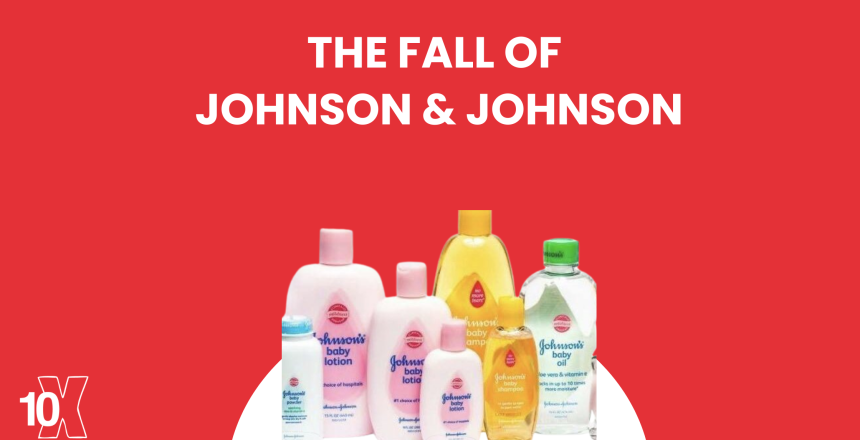
Introduction to Johnson & Johnson
Johnson & Johnson is a multinational corporation that was founded in 1886. The company has a long history of producing and marketing a wide range of consumer products, including pharmaceuticals, medical devices, and consumer health products. In recent years, however, Johnson & Johnson has faced a number of challenges that have contributed to its fall from grace.
The rise of challenges to Johnson & Johnson’s dominance
One of the biggest challenges Johnson & Johnson has faced is a series of lawsuits and legal settlements related to the safety and efficacy of its products. For example, in 2010, the company was forced to pay $72 million to settle a lawsuit over the safety of its Ortho Evra birth control patch, which was found to cause blood clots and other serious side effects in some users. In 2013, the company agreed to pay $2.2 billion to settle a federal investigation into its marketing of the anti-psychotic drug Risperdal, which was found to be potentially dangerous for certain patients.
Another major challenge Johnson & Johnson has faced is increasing competition from other consumer health companies. In recent years, many other companies have entered the market, offering new and improved products that are often cheaper and more effective than Johnson & Johnson’s. This has made it more difficult for Johnson & Johnson to maintain its market share and has contributed to its decline.
In addition to these challenges, Johnson & Johnson has also been criticized for its pricing policies, with some arguing that the company has been charging excessively high prices for its products. This has led to backlash from consumers and advocacy groups and has damaged the company’s reputation.
Overall, the fall of Johnson & Johnson can be attributed to a combination of factors, including legal and safety controversies, increased competition, and pricing controversies. Despite its challenges, however, Johnson & Johnson remains a major player in the consumer health industry and continues to develop and produce a wide range of products for consumers around the world.
Johnson & Johnson’s response to the changing market
Johnson & Johnson, a multinational pharmaceutical, medical devices, and consumer packaged goods company, has responded to changing market conditions in a number of ways. In the face of increasing competition and a shifting healthcare landscape, the company has focused on expanding its product portfolio and diversifying its revenue streams.
One strategy Johnson & Johnson has implemented is acquiring smaller companies and technologies that complement its existing products and capabilities. This has allowed the company to enter new markets and offer customers a wider range of products.
Johnson & Johnson has also made significant investments in research and development to drive innovation and stay ahead of industry trends. This includes partnering with academic institutions and startups to access cutting-edge technologies and ideas.
In addition to these efforts, Johnson & Johnson has worked to improve its supply chain and manufacturing processes to increase efficiency and reduce costs. This has included implementing lean manufacturing principles and adopting advanced technologies such as automation and data analytics.
Overall, Johnson & Johnson’s efforts to adapt to changing market conditions have helped the company maintain its position as a leading player in the healthcare industry.
The decline of Johnson & Johnson’s market share
It is important to note that a company’s market share can fluctuate over time and is not necessarily a measure of its overall success. Many factors can impact a company’s market share, including competition, changes in consumer demand, economic conditions, and the effectiveness of the company’s marketing and sales strategies.
In the case of Johnson & Johnson, the company has faced challenges in recent years that have contributed to a decline in its market share. For example, the company has faced recalls and lawsuits related to some of its products, which have led to negative public perception and reduced sales. Additionally, Johnson & Johnson has faced increased competition in certain markets, particularly in the pharmaceutical industry.
To address these challenges, Johnson & Johnson has implemented a number of strategies to maintain its market share and continue to grow. These strategies have included expanding into new markets, introducing new products and services, and investing in research and development to stay at the forefront of innovation. Despite these efforts, Johnson & Johnson’s market share may face pressure from changing market conditions and increased competition.
The future of Johnson & Johnson in a highly competitive market
Johnson & Johnson, a multinational pharmaceutical, medical devices, and consumer packaged goods manufacturer, has faced a number of challenges in recent years as it tries to maintain its position as a leader in the healthcare industry.
One major challenge has been the increasing competition from both large and small players in the market. In response, Johnson & Johnson has focused on diversifying its product portfolio and expanding its presence in emerging markets. It has also made a number of strategic acquisitions and partnerships to stay ahead of the competition.
Another challenge has been the changing regulatory environment, particularly in the pharmaceutical industry. Johnson & Johnson has worked to comply with new regulations and navigate the complex approval process for new drugs and devices.
Despite these challenges, Johnson & Johnson remains a strong player in the market, with a diverse range of products and a strong brand reputation. In the future, it will likely continue to focus on innovation and adaptability as it navigates an increasingly complex and competitive market.